


Solar Charge Controllers / Charge Regulators
A solar charge controller (aka solar regulator, charge controller) determines where the power from your PV array is distributed to. The power can be sent directly to the system load (eg. inverter or lighting) or to the system battery or even both. Solar charge controllers are either MPPT or PWM.
MPPT or PWM ?
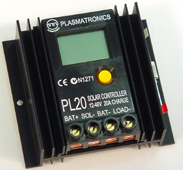
PWM stands for Pulse Width Modulation which is the simpler controller. PWM controllers are basically a switch connecting a PV array to a battery. No voltage conversions are performed and PWM controllers just pull down the voltage of the array to be near to the battery voltage. Checkout the Plasmatronics and Victron PWM regulators
MPPT stands for Maximum Power Point Tracking and are much more sophisticated. MPPT controllers adjust their input voltage to harvest the maximum power from the PV array. The voltage of the array and the battery do not have to be the same. You can couple a 36v PV array with a 12v battery using MPPT but a PWM controller will just adjust the PV array voltage to be as close as possible to the battery voltage.
To get the maximum power yield from a solar panel the controller needs to be able to select the optimum current-voltage point on the current-voltage curve, which is exactly what an MPPT controller does. The input voltage of a PWM controller will always be about the same as the battery voltage, less controller and cable volt drop which means the solar panels will hardly ever be using the maximum power point. If you are unsure if you need an MPPT or PWM controller then get an MPPT controller.

Need help choosing the right solar charge controller / regulator?
WA Solar Supplies – We know what we are doing